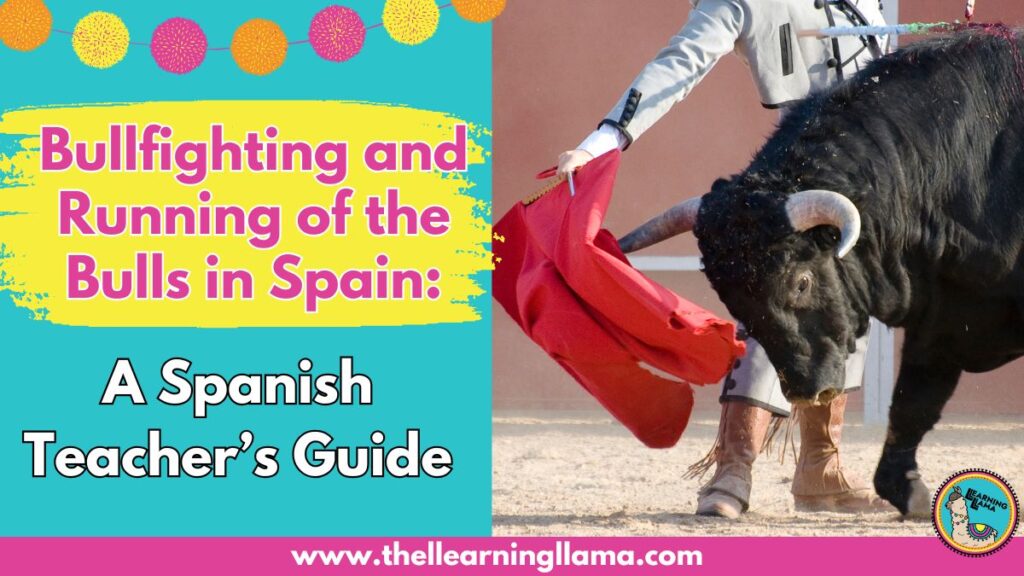
Bullfighting is one of the most well-known, yet controversial customs in Spain. Between traditional bullfights in the ring and the Running of the Bulls in Spain through the streets of Pamplona, this topic is filled with excitement, high energy, history, culture, and mixed emotions.
The customs of bullfighting and the Running of the Bulls in Pamplona, Spain naturally spark curiosity in Spanish students. They also create the perfect opportunity for meaningful classroom discussion and debate. Is bullfighting cruel? Is it art? Or is it culture? Should traditions like the Running of the Bulls still be celebrated today? Let your students explore the history, examine different perspectives, and decide for themselves.
I created this list of resources to help Spanish teachers introduce bullfighting and Running of the Bulls in Spain in a thoughtful, engaging, and age-appropriate way. You’ll find videos, artwork, classroom discussion ideas, complete lesson plans, virtual field trip ideas, and more!
Intermediate Spanish Lesson
My personal lessons focused more on Running of the Bulls (La corrida de toros) than strictly bullfighting, although I do touch on that because bullfighting is a daily event during the Festival of San Fermin.
I taught my Running of the Bulls lesson to intermediate Spanish 4 students. I’m going to share with you the lesson plan below, but you can always grab the complete lesson made for you!
Fiesta de San Fermin Lesson Plan
- Introduce vocabulary associated with La Fiesta de San Fermin (words like toro, cohete, San Fermin, corrida, herir, etc.)
- Do any vocabulary activities/games to practice these words. (Taboo, gallery walk activities, Kahoot, etc.)
- Read about Running of the Bulls. Provide students with information on Pamplona, the history of bullfighting, who was San Fermin, the festival, and of course the actual running of the bulls. You can do jig saw style readings for each section, a gallery walk reading, or even have student groups research and present each topic.
- Watch videos that explain the history, so students are hearing it and seeing it in more than one way.
- Watch videos of the event, like the encierros and bullfights. (Preview them first to ensure there is nothing too violent).
- Watch a video about the pros/cons of bullfighting. Have students formulate their own opinions and debate!
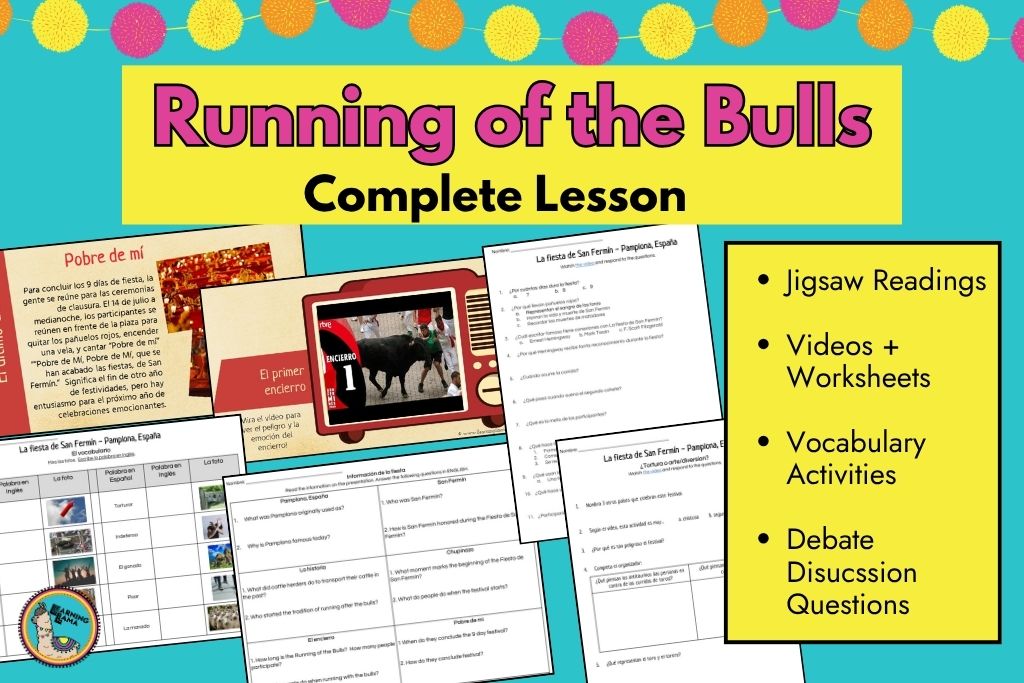
If you want my complete Fiesta de San Fermin lesson that will fill at least a week’s worth of lessons, check it out here! It includes:
- Running of the bulls vocabulary list and activities
- Jigsaw Readings and worksheets
- Videos with comprehension question worksheets
- Opinion video and questions: Culture or Torture?
- Over 40 pages of content!
Other teachers love this lesson: One teacher says “Amazing lesson! Used it over two-days and created a video submission assignment for it.” and another agrees, “This lesson was so fun and interesting. It also sparks great convo. Gracias!”
Debate: Cruelty or Culture?
Nowadays, many Spaniards believe bullfighting and Running of the Bulls should no longer be a part of modern culture. Others believe it is a symbol of Spain’s history and culture. Many non-Spaniards find it to be a cruel spectacle.
Let your students research the history of the bullfight so they can be prepared to speak about more than just a surface level opinion. Then, have them debate this moral issue. Ask them what they truly think. If it is very one-sided, you may want to randomly assign each student an opinion. It can be quite a skill to debate for the other side, even if you don’t agree!
Providing sentence starters is key for a debate. Give a notecard with simple phrases like “Estoy de acuerdo.” or “Pienso que…” Even your advanced students may have more confidence simply by holding onto a notecard with these sentence starters.
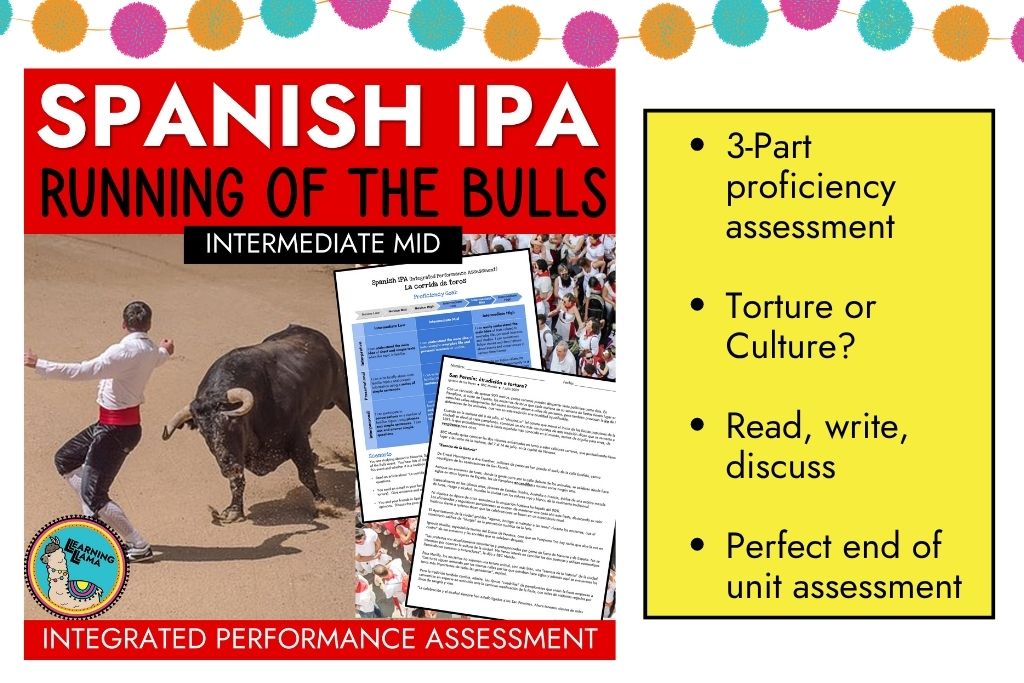
I used an article about bullfighting and turned it into an Integrated Performance Assessment. You can check out the full resource here.
Virtual Field Trip to Spain
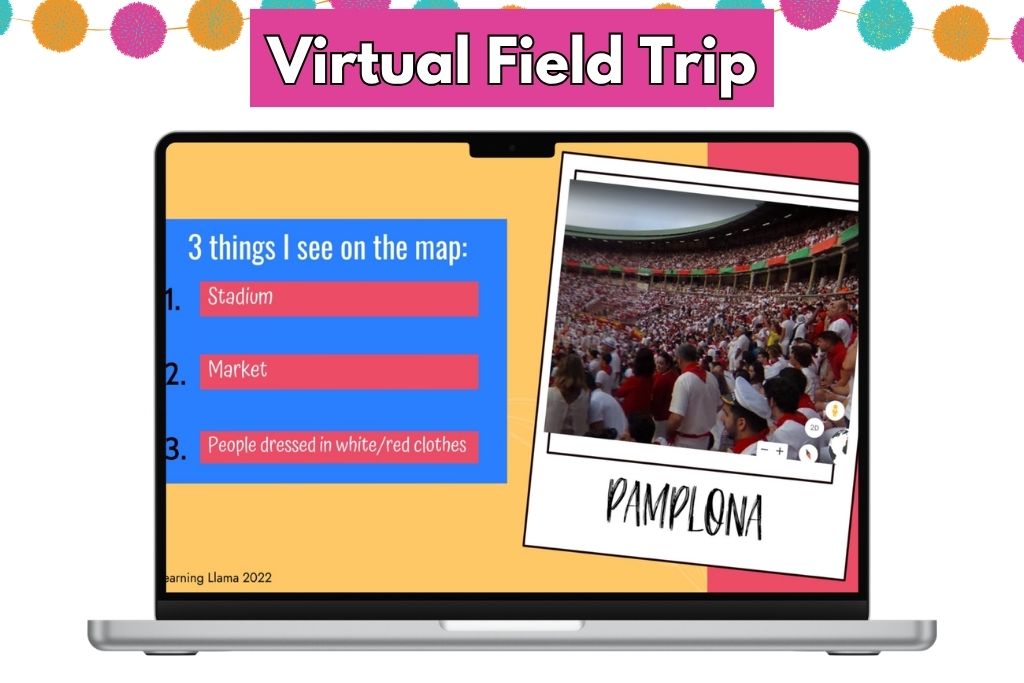
With Google Earth, it is possible to “travel” anywhere in the world… even the Pamplona bullfighting stadiums! I love using Google Earth for virtual field trips. I set up an itinerary that students follow by clicking through the prompts. As they get to each “stop,” they explore a 360 view of the location and screenshot their favorite views. Google Earth even lets you add descriptions to each stop, so you can write in the target language!
Here is one of my virtual field trips to Spain, with a stop at Pamplona for La Fiesta de San Fermín.
Videos
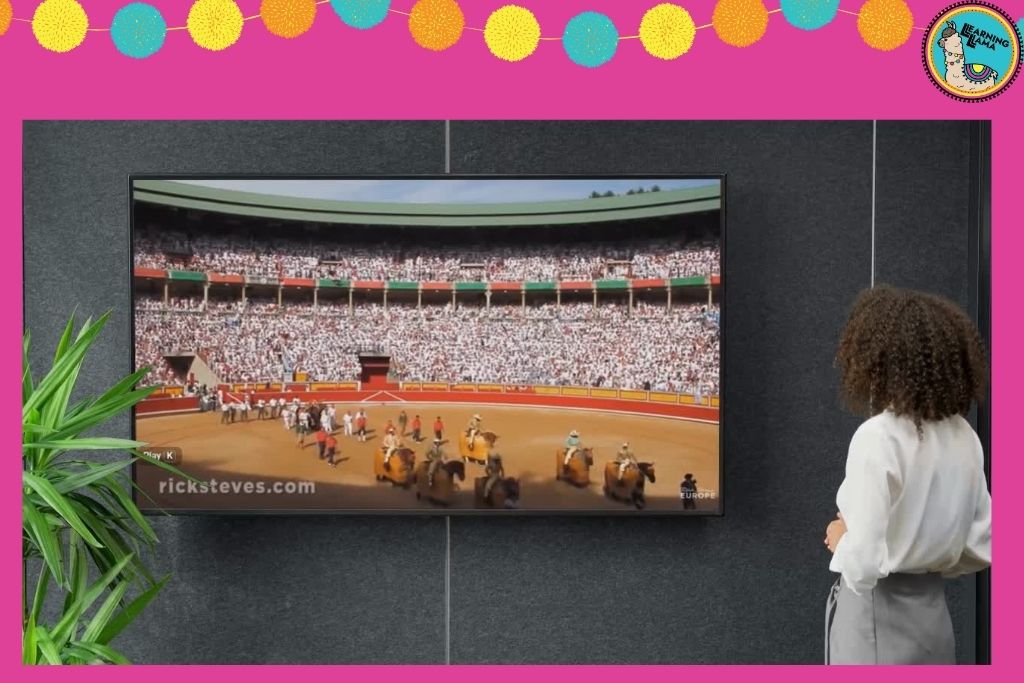
Bullfighting is one of those activities that you have to see to truly understand the spectacle. Just talking about it won’t do it justice. Here are some of my favorite videos to show my students.
- Rick Steves: Takes you on a tour of Pamplona and the events, citing historical and cultural facts. It is in English, but is a wealth of information!
- Tio Spanish: Made for Spanish learners, but filled with great information and video clips
- La Corrida #1: 2024 Bull Run – quick one minute video
- La Corrida #2: 2023 Bull Run – 3 minute video with commentary
- Por y para: Adding a little grammar to your lesson on los sanfermines
- Opinar sobre las corridas: Listen to pros/cons for bullfighting
Authentic Matador Clothing
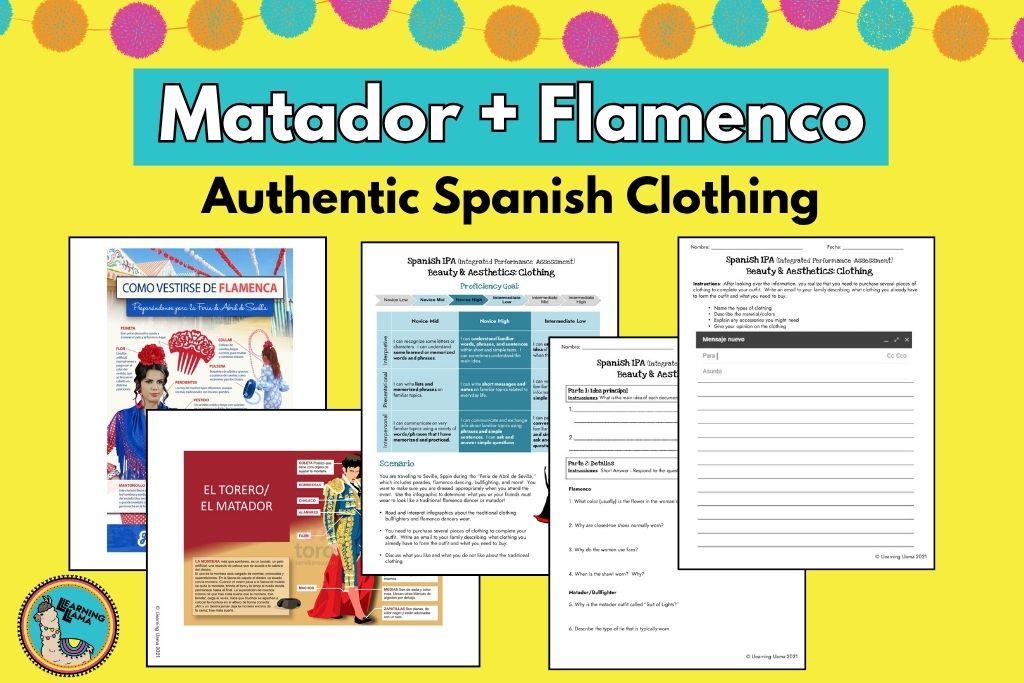
The matador is known for wearing a very traditional bullfighting outfit. Adorned with a hat, gold detailing, high socks, a red suit, and many more important pieces, the outfit makes the matador! Even your novice level students can talk about the clothing a matador wears. I created a novice level IPA for talking about authentic clothing of the matador and flamenco dancer of Spain. Find the resource here.
Artwork of Bullfighting
Paintings are one of my favorite ways to incorporate culture into Spanish class. You can easily use one painting in a variety of ways to add culture and communication. Here are 12 activities for any painting.
Ernest Hemingway famously wrote, “Bullfighting is the only art in which the artist is in danger of death and in which the degree of brilliance in the performance is left to the fighter’s honour.”
Here are some paintings by Hispanic artists that represent bullfighting.
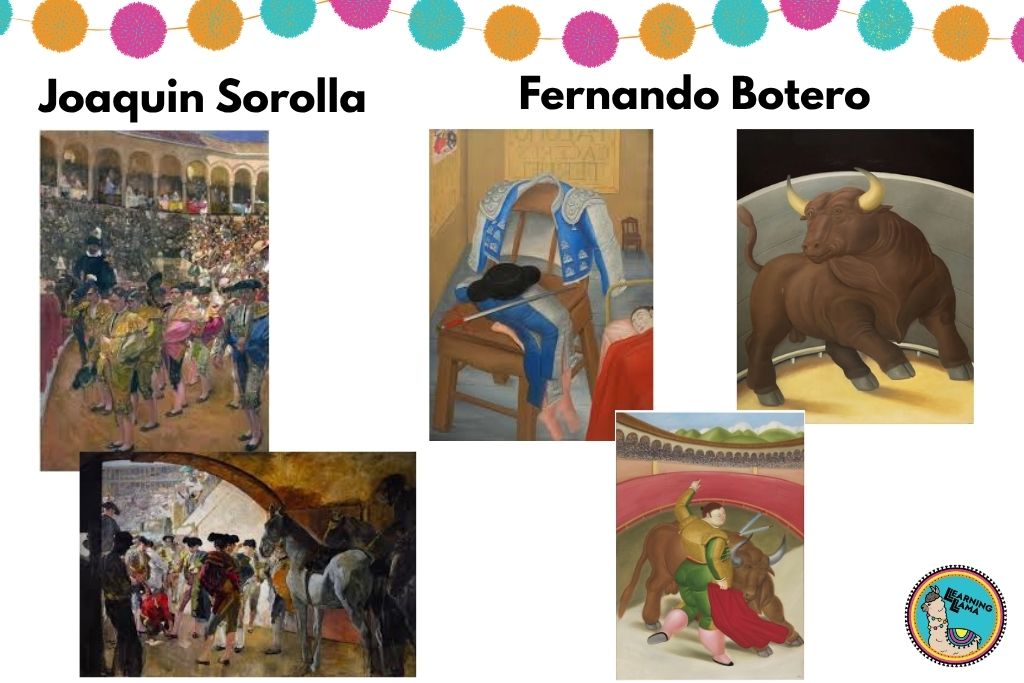
Picasso, Goya, Sorolla, and Botero were captivated by Spanish bullfighting and painted many artworks of this theme. Get more of my resources for Picasso on this blog post.
- Pablo Picasso: La Corrida, 1955
- Pablo Picasso: The Picador, 1900
- Francisco de Goya: Desjarrete de la canalla con lanzas, medias-lunas, banderillas, y otras armas, 1816
- Francisco de Goya: Pass with a Cape, 1793
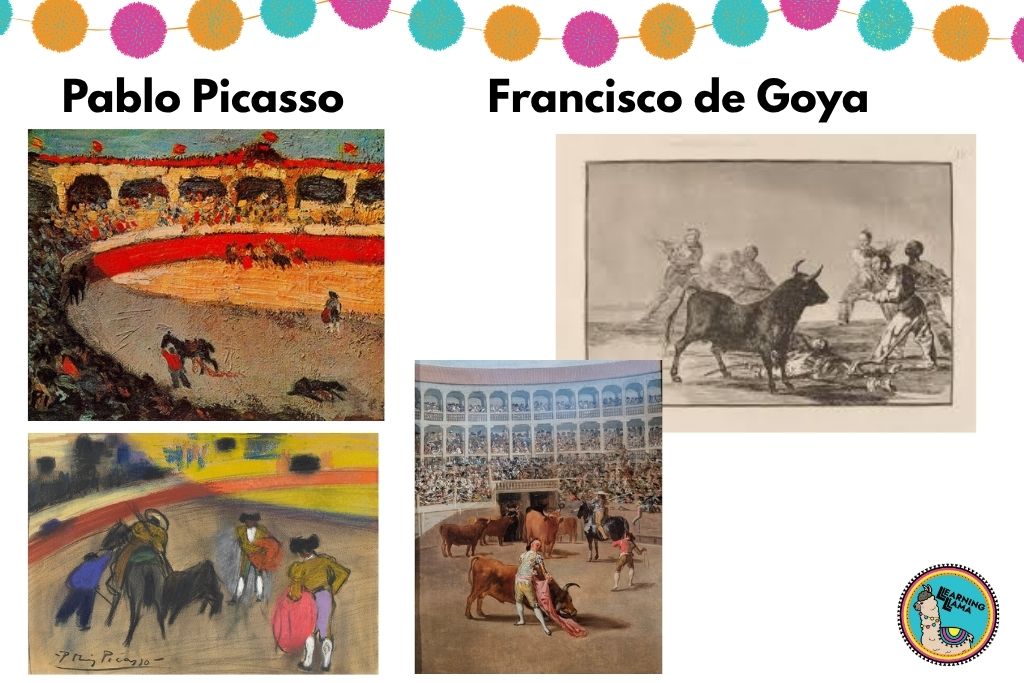
- Joaquin Sorolla: Seville, the Bullfighters (Seville, Los toreros, 1915
- Joaquin Sorolla: Antes de la corrida, 1900
Fernando Botero (Colombia) was very fond of bullfighting. He actually spent his childhood days studying bullfighting and attending bullfighting school. But he felt more drawn to art than to bullfighting. His passion and curiosity for bullfighting remained with him throughout his career as he painted many scenes of bullfighting. In 2012, Botero published Bullfight: Paintings and Works on Paper, a massive collection featuring over 140 oil paintings and 35 drawings.
- Fernando Botero: The Matador’s Bedroom, 1985
- Fernando Botero: The Bull, 1986
- Fernando Botero: Derechazo, 1932
Complete Set of Spain Lesson Plans
If you are looking to teach more about Spain, or this bullfighting lesson is a small part of a larger “Spain lesson,” then you need to check out my other blog post: Authentic Activities for a Spain Lesson Plan That Will WOW Your Students. From La Tomatina to Gaudi to flamenco, you’ll find tons of resources that will make your Spain lessons more cultural and exciting.
Teaching bullfighting and Running of the Bulls in Spain requires more than simply explaining the tradition. Students need authentic resources, visuals, historical context, and opportunities to hear multiple perspectives so they can better understand why these customs are both celebrated and criticized.
Whether you use videos, artwork, debate, a virtual field trip, or a complete Fiesta de San Fermín lesson, this topic can lead to some of the most thoughtful conversations in Spanish class. I always love hearing students express their opinions, support their ideas, and wrestle with the big question at the heart of the debate: is bullfighting a meaningful cultural tradition, or is it time for Spain to move on?