When we think of Hispanic folk art, it’s easy to picture paintings or sculptures—but Hispanic art goes far beyond what hangs on a wall. Across the Spanish-speaking world, art forms are woven into daily life, traditions, and even transportation. From brightly painted buses to hand-stitched textiles and ancient desert designs, these cultural expressions tell stories about history, identity, and community. Exploring these unique art forms in your classroom is a meaningful way to bring culture to life and spark curiosity about the diverse regions of the Hispanic world—without needing to be an art teacher.
Alebrijes (Mexico)
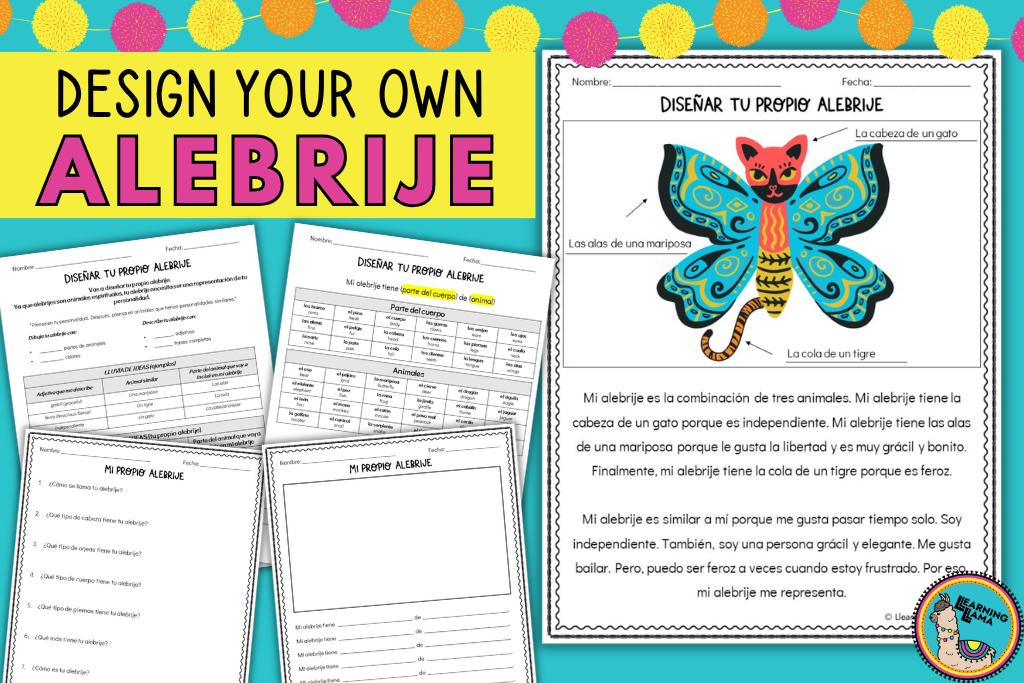
Alebrijes are mythical creatures of Mexican folk art. They are brightly colored figures that combine multiple animals into one unique creature. Alebrije animals were created by Pedro Linares in the 1940s. They are an artform and creative expression that were made popular by artists like Diego Rivera and Frida Kahlo.
They have recently been associated with Day of the Dead because of the popular movie Coco. So, if you’re looking to incorporate art and culture with an easy buy-in from your students, start here. Plus, alebrijes are fun, unique, and colorful animals. What student doesn’t love that?
Read my whole blog about alebrijes animals lesson plans here. But my top 3 favorite activities are Create Your Own Alebrije, Which Alebrije Are You? Personality Quiz, and Describe and Draw Alebrijes.
Sarchi Ox Cart Wheels (Costa Rica)
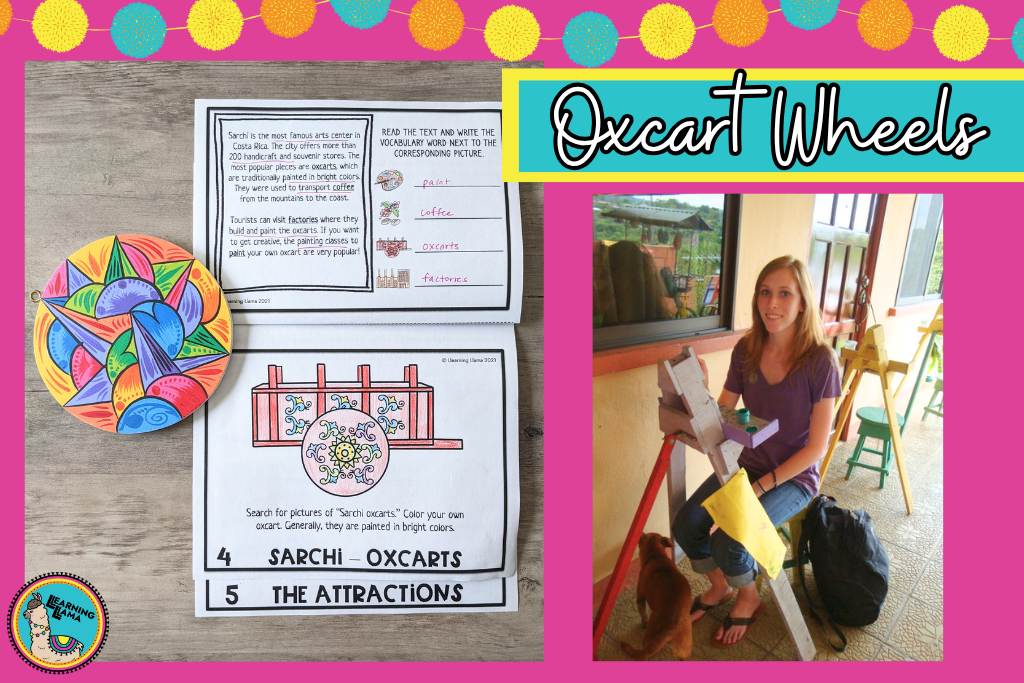
In Costa Rica, oxcarts were once the main form of transportation in a country that depended on agriculture for survival. Today, oxcarts are mostly used for celebrations and are a traditional and cultural icon of Costa Rica.
In Spanish, these colorfully-painted wood oxcarts are called carretas. Oxcarts were often a family’s only form of transportation. Based on how elaborately painted the cart was, it demonstrated the wealth of the owner, since they had the money to pay a talented painter.
I traveled to Costa Rica in high school with my school’s Spanish club. One of my fondest memories was our stop in Sarchi, where we explored the handicraft stores and sat down to paint our own oxcart wheel!
You can take a virtual field trip to Sarchi, Costa Rica to explore the local Hispanic folk art shops, workshops, and even the largest oxcart in the country! Here are some great classroom resources:
- Virtual field trip with a stop in Sarchi
- Interactive flipbook with a section on oxcart wheels.
- 10 Fun Facts About Costa Rica (Sarchi is featured as one!)
Muñecas Quitapenas (Worry Dolls) (Guatemala/Mexico)
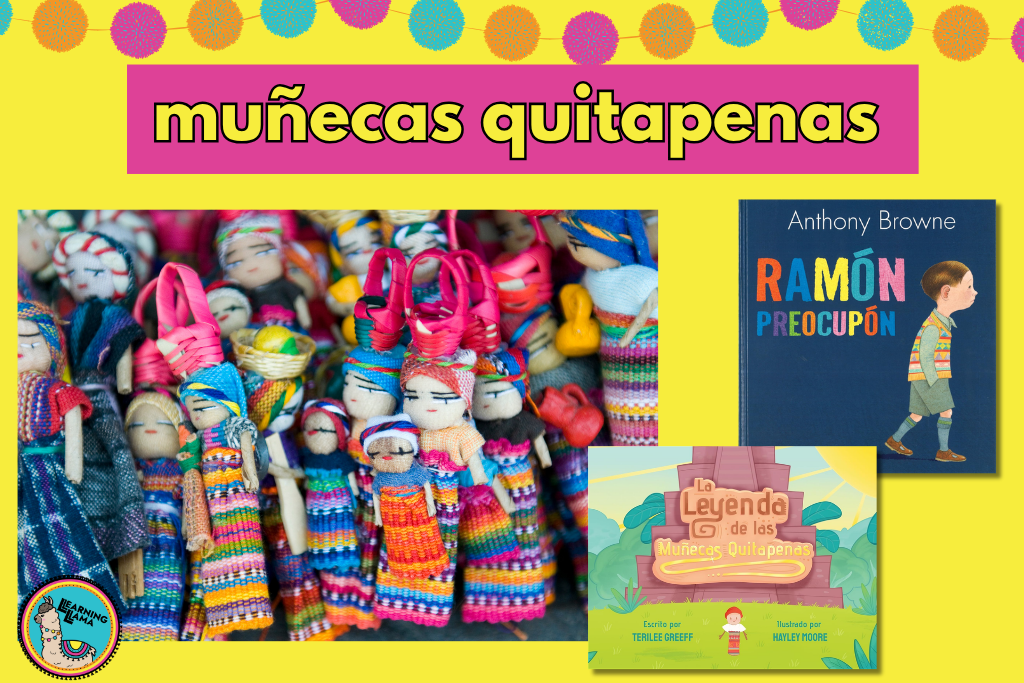
Guatemalan worry dolls or muñecas quitapenas are small handmade figures designed to help people manage worries. They originate from the Maya culture and are still crafted today by indigenous artisans using wire, wool, cotton, and colorful textiles.
According to legend, you tell a doll about your worries before you go to sleep. Then, place the doll under your pillow, so while you sleep, the doll will take away your anxieties overnight.
These mini dolls are easy to make in class with craft materials on hand, including twigs, pipecleaners, wire, yarn, scrap fabric, etc.
Here are two great children’s books to read to your students to explain worry dolls: Ramón Preocupón and La Leyenda de las Muñecas Quitapenas.
You can also get a set of muñecas on Amazon to share with your students. Here is a set of 12 larger dolls and a set of 150 very small dolls.
Chicken Buses (murals on wheels) (Guatemala/Latin America)
I first came across chicken buses when I was serving as a translator in Guatemala. I was blessed to be a parishioner at an amazing Catholic parish in NJ that has a strong partnership with a diocese in Guatemala. We went on two mission trips in 2017 and 2018 to small aldeas (villages) and fell in love with the people, culture, and country. It holds such a special place in my heart.
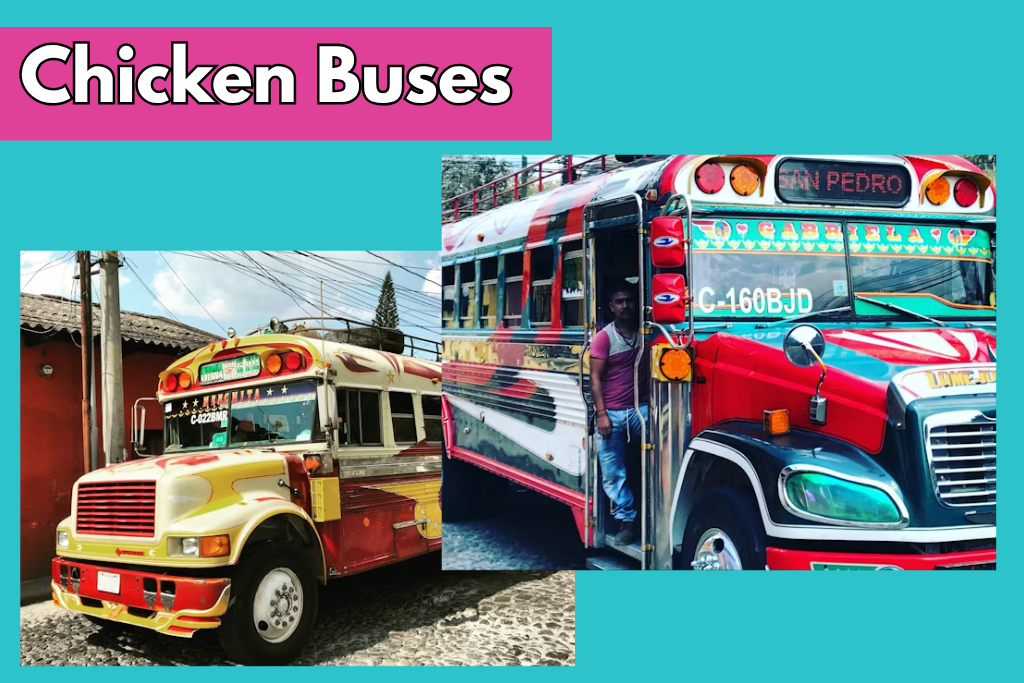
I remember traveling down the roads, always seeing brightly colored buses that looked like they were from a dream, so out of place in rural Guatemala. Our local contact with the parish, also our driver, told us about chicken buses. They are public transportation used in Central America, mainly in Guatemala.
These buses were originally American school buses that were no longer used and sold at auctions. The buses were then transformed into these brightly colored public transportation vehicles in Latin America. They are called chicken buses because anything from produce to livestock can be found alongside human passengers.
Each bus is individually owned and is a family’s main source of income. So, each family can choose to decorate the bus how they want. It is a form of artistic self-expression. You will see buses that highlight religious icons, local folklore, and favorite soccer teams. These are more than just public transportation – they are moving art pieces, murals on wheels. As out of place as they may have seemed to me, they are true Hispanic folk art on wheels.
La Sagrada Familia (Spain)
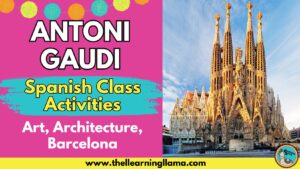
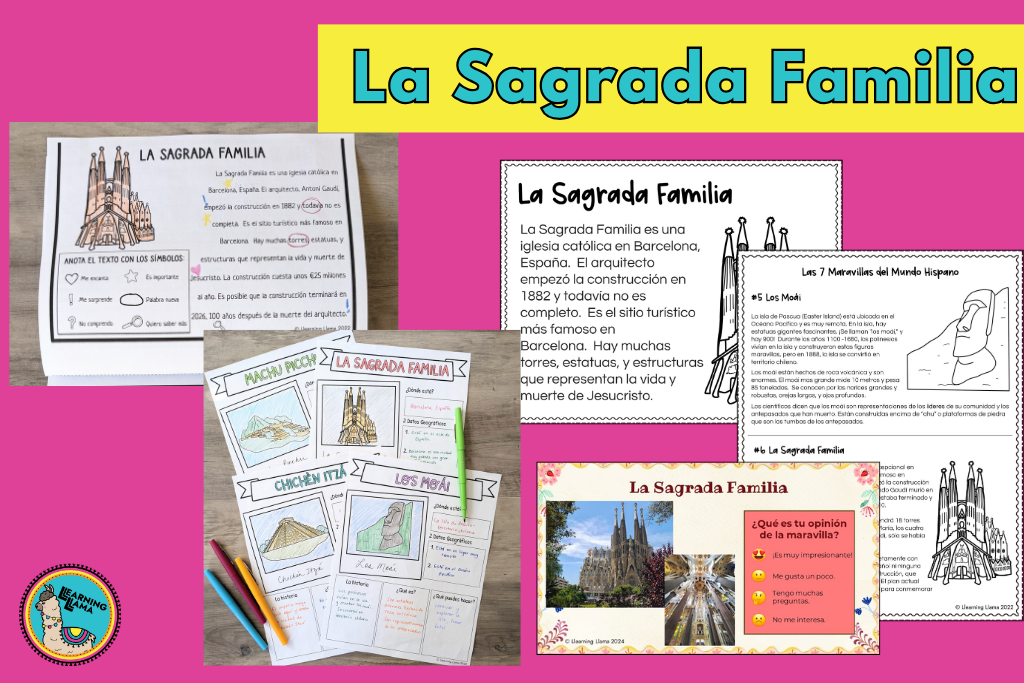
Architecture can be a beautiful art form, and one of the most iconic structures in Hispanic culture, even in the world, is La Sagrada Familia. It is a renowned Roman Catholic minor basilica in Barcelona, Spain, famously designed by Antoni Gaudí.
Under construction since 1882, Antoni Gaudí’s elaborate design will be completed in 2026, although details will still be finalized for years to come.
I love exploring La Sagrada Familia with my students as part of a unit on the 7 Wonders of the Hispanic World. One of the best ways to look closely at the architecture and sculptures is through 3D tours or videos of the outside and inside of the church. Here is a video of the inside and the outside.
One fun fact to share with your students is how Gaudi made the molds of the sculptures – using live people and animals with a plaster mold so his sculptures could be as realistic as possible.
Nazca Lines (Peru)
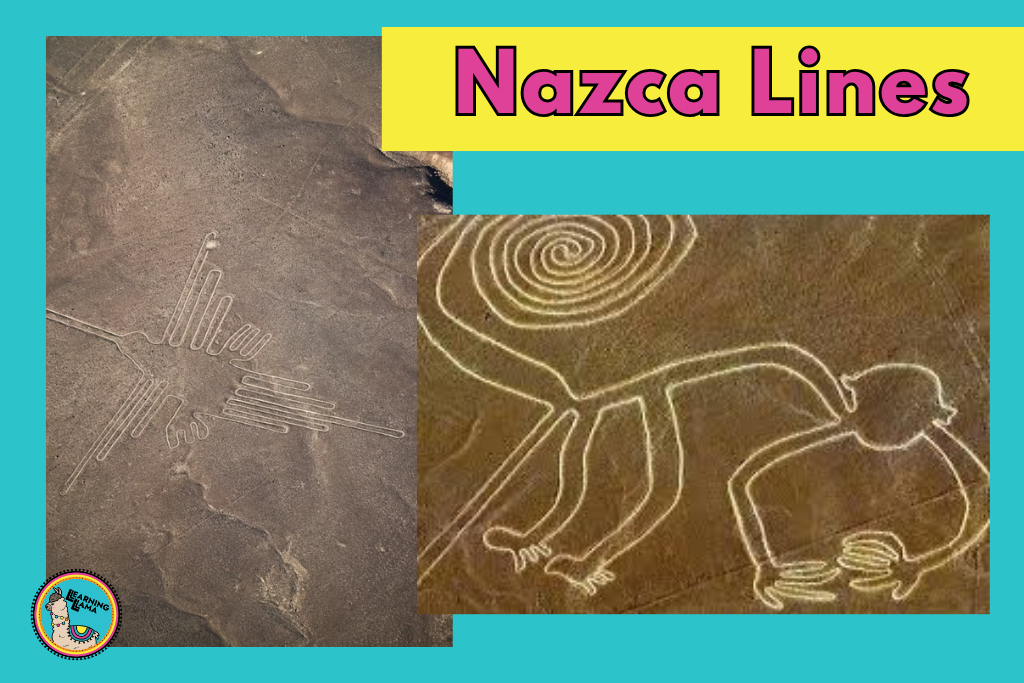
I think the Nazca Lines are incredibly fascinating. They are found in the desert of southern Peru and were made between 500 B.C. and A.D. 500. . They are a collection of over 1,300 massive, ancient geoglyphs—geometric shapes, straight lines, and stylized animals. Some of the shapes include: monkey, spider, hummingbird, lizard, trees, flowers, triangles, spirals, lines, and more.
The Nazca Lines were created by the Nazca culture. They removed dark, iron-oxide-coated pebbles to reveal lighter subsoil. It is likely that they were made for ritual, astronomical, or water-related purposes.
One of the craziest facts about these geoglyphs is that they were made over 2,000 years ago without aerial technology. When looking down upon these artworks in the sand, they remind me of a corn maze that is planned out ahead of time before a farmer starts cutting down cornstalks. But their creation is such a mystery to me.
The Nazca Lines are still in nearly perfect condition to this day due to the dry windless climate of the Peruvian desert.
As a fun classroom idea, have students sketch out their own sand geoglyphs. You can buy cheap play sand and use tins from the dollar store or have students draw on a piece of paper.
Molas (Panama)
If you haven’t joined my Art in Spanish Facebook group yet, make sure you do. I discovered molas from a fellow Spanish teacher in the group. We’re always learning from one another!
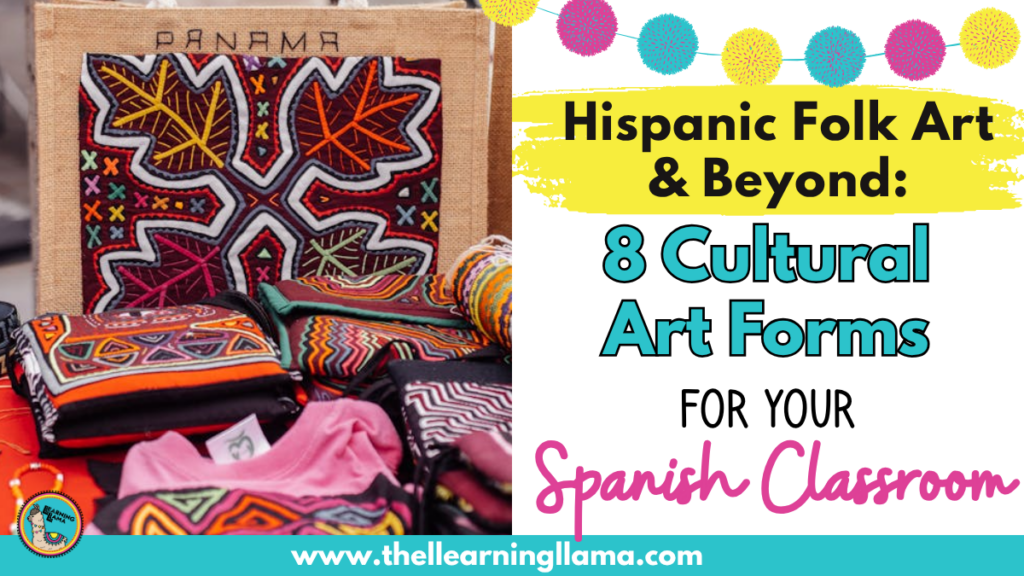
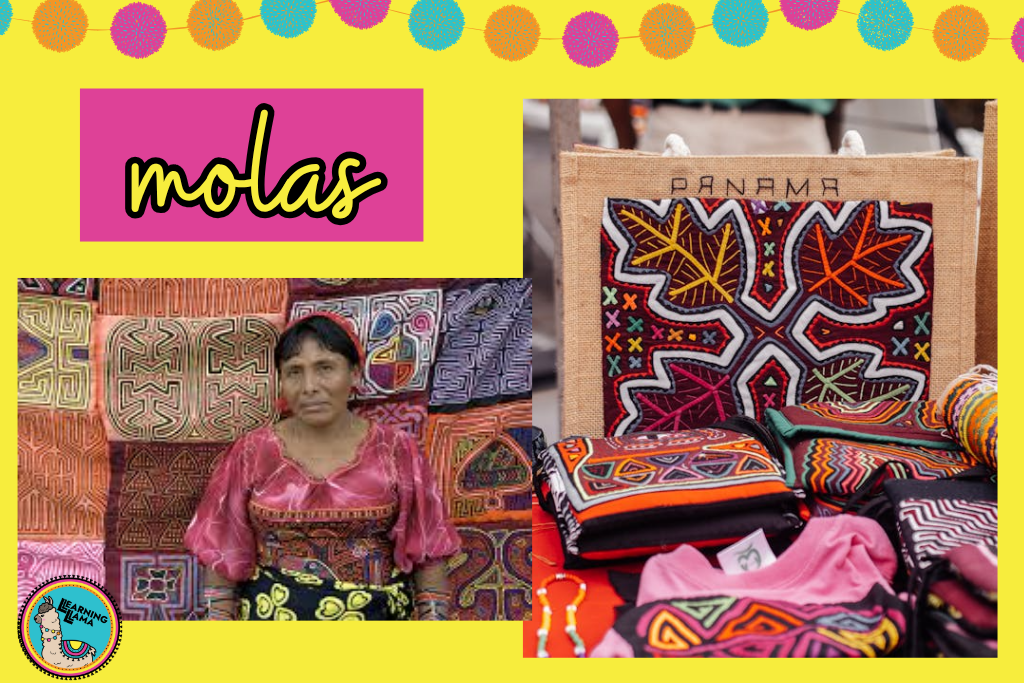
Molas are beautifully detailed hand-stitched textiles created by indigenous women of Panama. The Guna (previously known as Kuna), an indigenous group from Panama have been creating colorfully embroidered clothing for centuries. In the Guna language, “mola” means shirt, and is a traditional dress typically worn by women, known for its bright colors and intricate designs.
The women use a specialized reverse appliqué technique, made of several stacked layers of cloth that are cut and sewn to form designs. Each shirt can take anywhere from 60-80 hours to make. Some of these brightly colored designs depict flowers, birds, reptiles, and animals.
You can explore the Museo de la Mola’s website to learn more about this beautiful Hispanic folk art.
Huichol Yarn Paintings (Mexico)
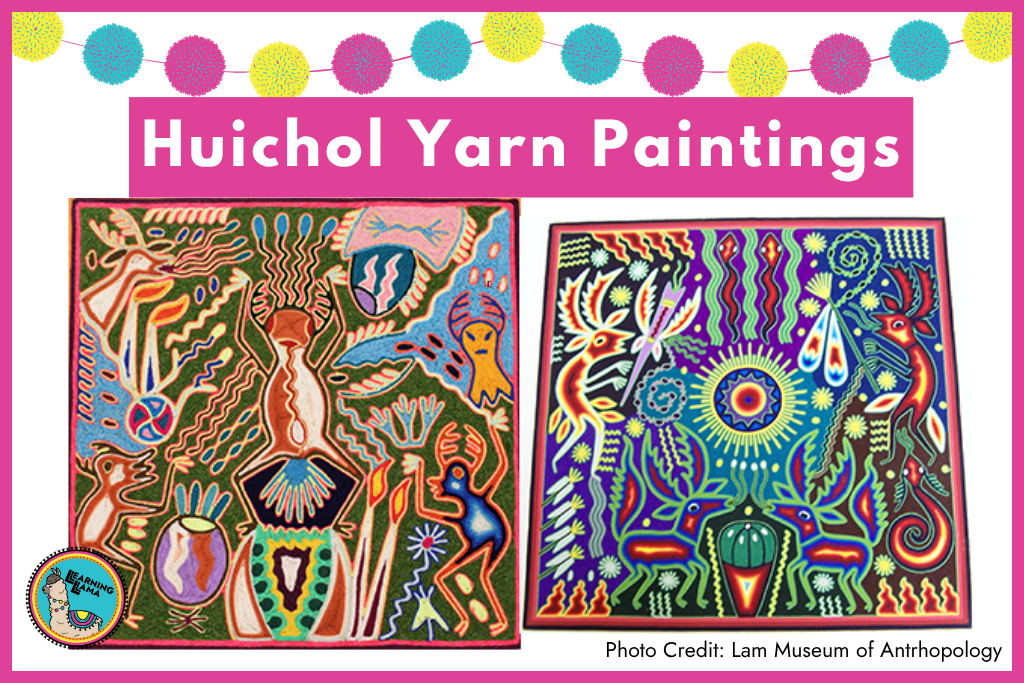
Huichol yarn paintings are vibrant, intricate folk art pieces created by the Wixárika (Huichol) people of Western Mexico. To make yarn paintings, an artist spreads beeswax on a board and then sketches out a design. Then, they carefully press brightly colored yar into the wax.
These creations feature bright colors, patterns, and symbols such as spiritual visions, shamanic myths, deer, and corn to tell stories and express their spiritual worldview. Historically, shamans created these objects to reflect their spiritual relationships with ancestors and nature deities. They are also made as offerings to their gods.
Today, creating bead and yarn works has become a source of income for individual Huichol artisans. Each develops their own personal style. Although the art is very symbolic, the sale of their artwork is still important for their livelihood.
Here is a tutorial to make your own yarn paintings.
Incorporating Hispanic folk art into your classroom opens the door to rich cultural conversations, creativity, and real-world connections. Whether your students are designing their own alebrijes, analyzing architectural wonders, or learning the stories behind traditional crafts, these art forms make culture tangible and engaging. They also offer a natural bridge to discussions about travel, history, and everyday life in Spanish-speaking countries. Start with just one of these ideas, and you’ll quickly see how powerful—and memorable—these cultural connections can be for your students.