If you’re looking for a way to make vocabulary lessons come alive (and maybe scream a little), teaching monsters in Spanish is the perfect mix of spooky and educational fun! Whether you want to teach monsters to help students master body parts, colors, or descriptive adjectives, or you’re diving into the creepy legends behind monsters Spanish folklore, these activities will keep even your most hesitant learners engaged. From interactive favorites like Label a Monster to comparison games, storytelling, and interpretive listening tasks, you’ll find endless ways to turn your Spanish classroom into a monstrously good time while building confidence and vocabulary for every proficiency level.
Label a Monster
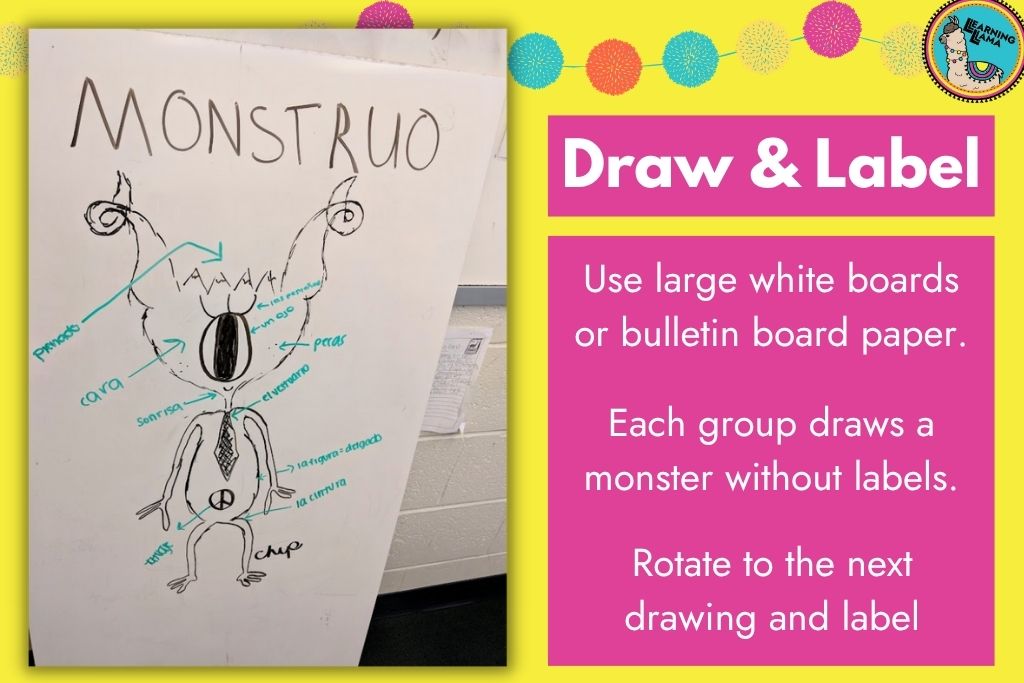
This activity is great for Spanish 1 students learning body parts. They do not need to write detailed descriptions, and your novice low students may only be able to label and write lists, so this is perfect!
Use a large white board (with my $10 Home Depot hack) or a big piece of bulletin board paper. Students will work in groups to draw a large monster. You will need to give some parameters, like a list of body parts to include. But they can use different quantities, colors, and locations. After drawing, they rotate to the next group’s monster. They will label all of the body parts in Spanish. They can also write a description with “hay” or “tiene” to describe quantity of each body part. Hay cinco piernas. El monstruo tiene tres ojos.
Monster Battle
After students have drawn their own monsters, practice using superlatives. They will pair up with another student or group and compare monsters. Here are some examples: Mi monstruo tiene más ojos que tu monstruo. Mi monstruo es más grande.
Describe and Draw
This is my favorite activity – and you can play it in SO many ways! Students will use their creativity, teamwork, and you’ll even get them up and moving! You need pictures of about 10-20 monsters. Each should have different body parts, colors, shapes, etc. Grab my complete set here (Spanish and English versions available) and check out 9 ways to play below:
Gallery Walk Games:
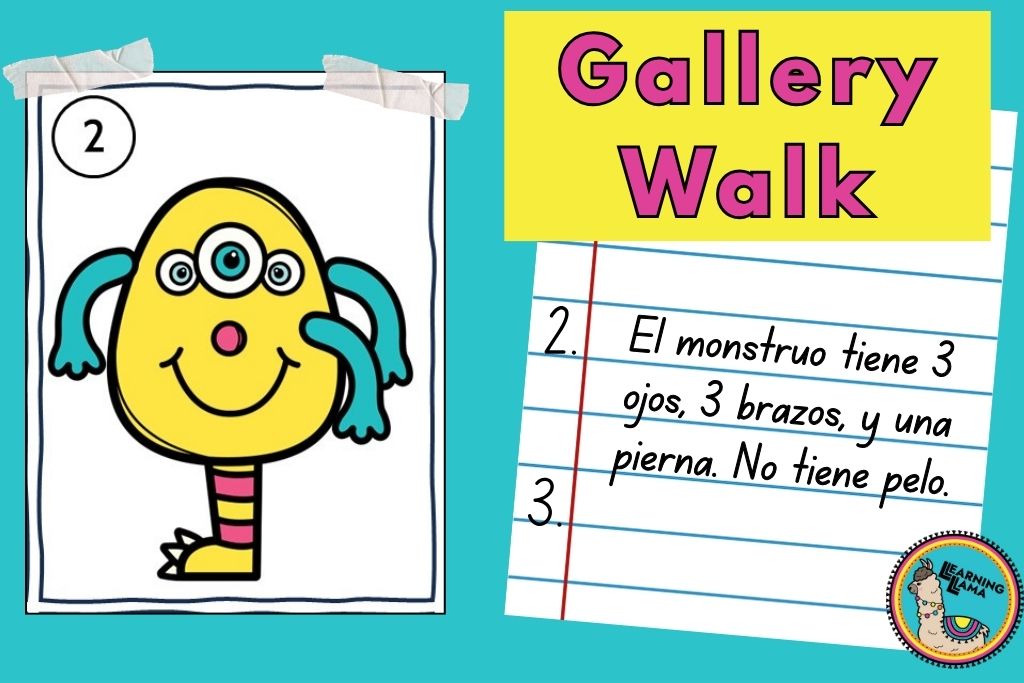
Post the IMAGES of the monsters around the room. Number each monster.
- Students walk around with a blank sheet of paper and write sentences to describe each monster.
- Post-Its: Students are each given a handful of post-it notes and walk around to describe the monsters with either short phrases or complete sentences.
- Scavenger Hunt – give students a list of questions like “How many monsters have 4 eyes?” “Which monsters have 2 arms?”
Gallery Walk Games:
Post the WRITTEN DESCRIPTIONS of the monsters around the room. Number each description.
- Students walk around and read the descriptions. Every student draws their own version of the monster on their own paper or tapes their drawings next to each description. (Or each group is responsible for one monster).
Interpretive Listening:
The teacher needs a script to describe each monster in basic Spanish. (El monstruo tiene dos ojos, tres brazos, y una pierna. En la cabeza, hay mucho pelo rizado.) Give students a blank sheet with 10-20 boxes – one for each monster.
- The teacher reads the description aloud as the students draw the monsters.
Interpretive Reading:
- Match the monster images to the written descriptions.
Small Group Games:
Print out flash card size cards with monsters on them.
- Read a description of a monster. The first student to find the matching monster and hold it up is the winner.
- Give one image to each student. They do not have the description. They need to describe it to their classmate who will draw it. Then compare the drawing to the original.
- Guess Who: Students describe one of several drawn monsters without saying its name, and classmates guess which one is being described.
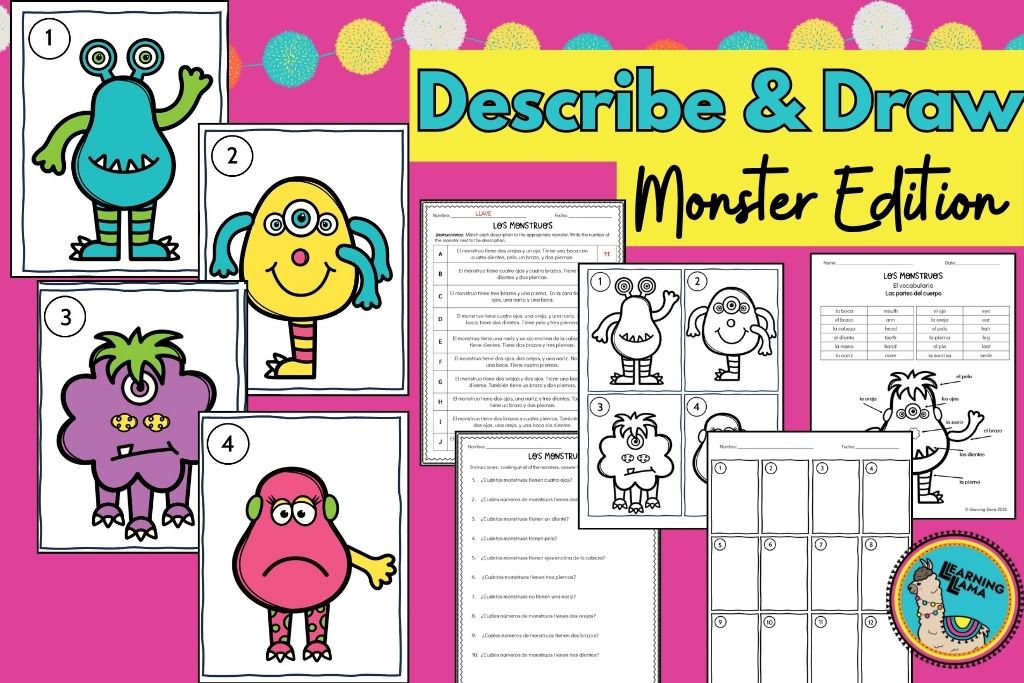
To play any of these 9 ways, you can get my Describe & Draw: Monster Edition resource here. You can also create your own – just with images of monsters, or even have students draw their own for your classroom set of monster images.
Read a Hispanic Legend About Monsters
Spooky myths and legends like La Llorona, El Chupucabra, and El Silbón are great for incorporating culture into a monster unit. Here is a list of 13 spooky legends. But what do you do once you find a legend you want to share with your students? Check out my blog post where I share all my favorite myths and legends activities. My personal favorite – using TPRS and then having students retell the story with images.
The legend of the Ghost of La Quinceañera is a student favorite! It may not be a monster, but can still fit in with the spooky theme if you’re doing monster and Halloween theme activities in October!
Monster Interview
One student plays a reporter, the other is their monster. The “monster” needs to create a persona – a name, physical description, personality type, where they live, eat, etc. They practice questions and answers using familiar structures (e.g., ¿Cómo te llamas? ¿Qué comes? ¿Dónde vives?). Then, switch roles! It practices common questions and the present tense with a fun twist rather than constantly answering about yourself!
Monster Profiles
Think Monsters Inc. The monsters your students create will be working at Monsters Inc. and need an ID badge or even a social media profile. Grab a free Instagram template here that students can use. On their ID card or profile, they need to include: a drawing, name, age, habitat, favorite food, what it does for fun, etc. (Se llama… Tiene… Vive en… Come… Le gusta…).
Se Busca – Wanted Poster
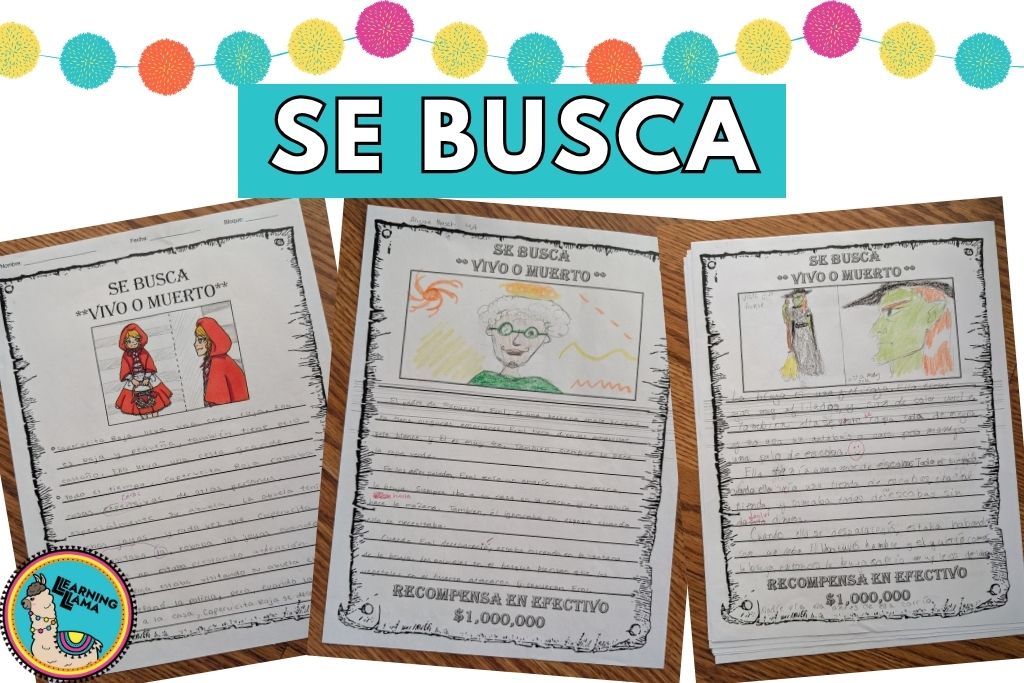
Monsters are considered the bad guys. Create a Wanted Poster for a monster that is on the run from the cops. Students will draw the monster, describe its physical traits so people know what to look for, and describe what it was last seen doing. This writing activity is best for students that know past tense so they can identify what the monster WAS doing. You could always edit the project to just include physical and personality traits for novice students.
I’ve used this project when teaching a fairy tales unit. Students identify the villain and create a Se busca ad.
Teaching about monsters is extra fun if you do it during Halloween time! Here are some of my other favorite resources for Halloween and October:
- What Candy Am I? Spanish Personality Quiz
- Funny Bilingual Halloween T-Shirts for Spanish Teachers
- 8 Pumpkin Activities for Spanish Class
- Day of the Dead Books for Kids
- Day of the Dead Vocabulary Activities
Teaching monsters in Spanish is more than just a seasonal activity — it’s a creative, high-engagement way to build language skills all year long. When you teach monsters, students get hands-on practice with body parts, descriptions, and comparisons while using their imagination and humor. Whether they’re labeling a monster, acting out interviews, or reading about legendary creatures from Spanish-speaking cultures, these lessons transform vocabulary into something memorable. So grab your markers, cue the spooky music, and get ready to make your next unit monstrously fun!